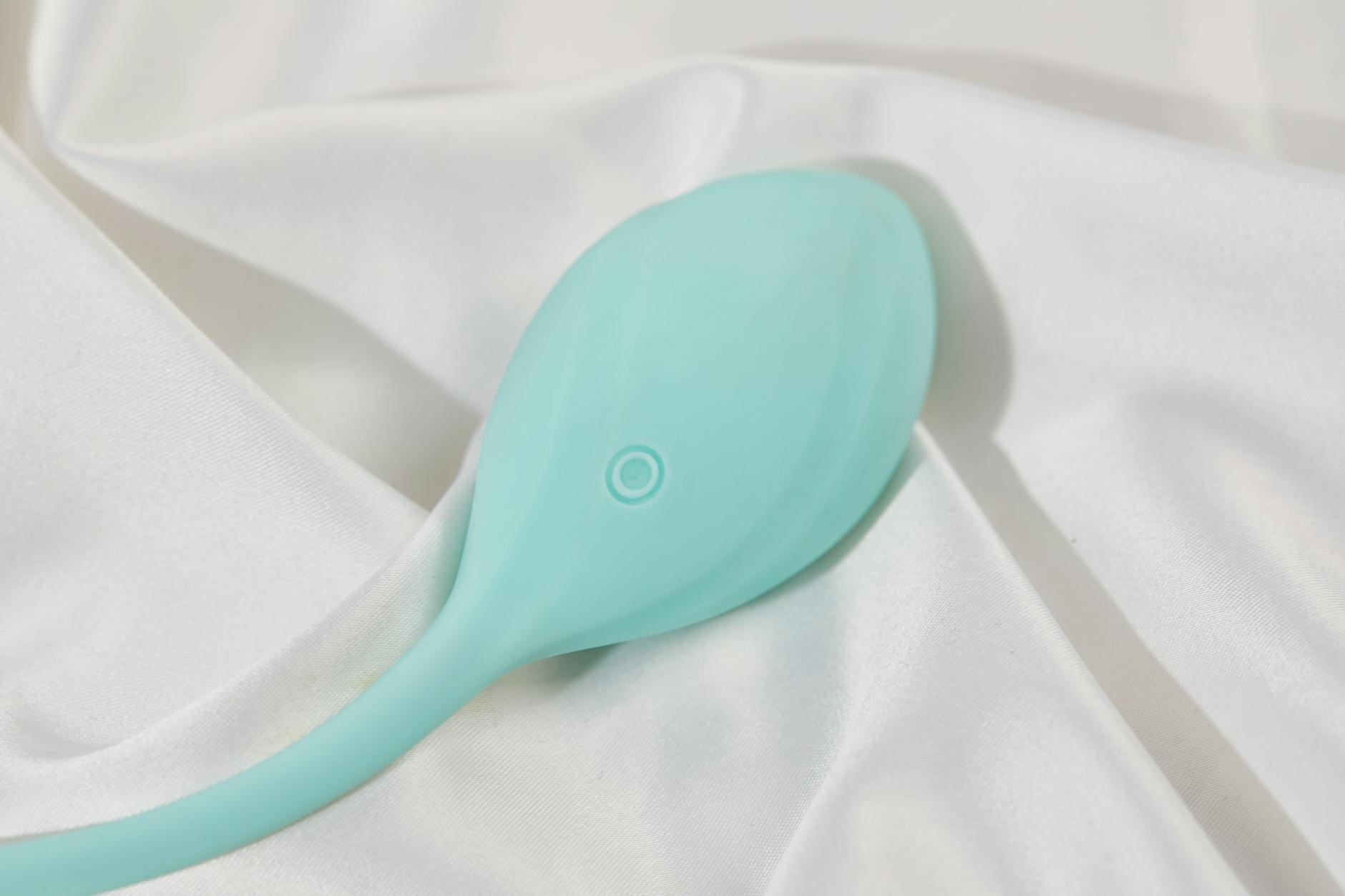
How to Use Lemon Vibrators During Perimenopause When Hormones Shift
Let's be real. Perimenopause is a decade of your body being a slightly different person every two weeks. One cycle you're lubricated and aroused by Tuesday. The next cycle, arousal takes forever and lube is non-negotiable. Your clitoris might feel more sensitive, then numb, then oversensitive again—sometimes within the same week.
Most people don't talk about this part. They talk about hot flashes. They talk about irregular periods. What they don't mention is that your pleasure patterns are rewriting themselves in real time. Which is exactly why lemon vibrators and suction toys become so useful during perimenopause. A lemon clitoral vibrator (sometimes called a lem vibrator) doesn't rely on the same arousal cascade your body used to run on autopilot. It works with whatever your hormones are doing that day.
Here's how to adapt your approach as your body shifts.
What perimenopause actually does to arousal
Your ovaries are winding down production of estrogen, progesterone, and testosterone, but they're not winding down in a linear way. They pulse up and down erratically over a span of 4-10 years. This isn't just about hot flashes or irregular periods. The fluctuation directly changes how your nervous system responds to touch.
Estrogen affects blood flow to the clitoris and vaginal tissue. When it's high, arousal is quicker and lubrication comes faster. When it dips, both slow down. Progesterone rises and falls too, and high progesterone can actually suppress desire. Then there's testosterone, which hasn't gotten enough credit in the conversation about women's pleasure. It drops gradually during perimenopause, and it's one of the primary drivers of sexual interest. Loss of testosterone doesn't mean loss of capacity for pleasure, but it often means arousal requires more deliberate stimulation rather than spontaneous interest.
The result: your old shortcuts stop working. Traditional vibration alone might feel too intense one week and too subtle the next. Your body might take 5 minutes to respond, then suddenly take 25. You might need lube sometimes and be fine without it other times.
Why lemon suction vibrators adapt better than traditional toys
A lemon vibrator uses air-pulse or suction technology rather than direct vibration. This is meaningful during perimenopause for three reasons.
First, suction stimulates the clitoris without the constant, high-frequency vibration that can feel overwhelming when hormones are in flux. If your tissues are more sensitive one day, suction feels gentler. If sensation is dulled, you can increase the intensity without triggering overstimulation. Traditional vibrators have intensity levels, sure, but they're still vibrating at a fixed frequency. A lemon clitoral vibrator gives you more granular control over sensation.
Second, the suction pattern actually encourages blood flow to the area. During perimenopause, when estrogen fluctuations are reducing natural blood flow, this becomes an asset. The suction pulls blood into tissue gradually rather than bombarding it with vibration.
Third, lem vibrators tend to work faster. That matters when your arousal pattern is unpredictable. If some weeks your body takes longer to warm up, having a toy that can deliver results in 8-12 minutes instead of 20-30 reduces frustration and keeps you in the moment.
Starting with reduced intensity when hormones are high
If you're tracking your cycle (or trying to, during perimenopause when it's increasingly chaotic), pay attention to the first half of your cycle, when estrogen is rising. Your tissue is more plump, more sensitive, and blood flow is already elevated. During this phase, many people find that traditional intensity levels feel too strong.
Start with the lowest setting on your lemon clitoral vibrator, even if you've used a lem vibrator for years and gone straight to intensity level 5. The reason isn't that you've become sensitive—it's that your tissues are more sensitive, and overwhelming them defeats the purpose. Spend 3-5 minutes at level 1 or 2. You'll likely feel arousal building, which tells you the suction is working. Move up only if sensation plateaus, not because the current level isn't strong enough.
This prevents that weird experience of overstimulation followed by numbness. It also keeps you in control when your body is being unpredictable. You're not fighting the toy. You're working with it.
Ramping up during the luteal phase when sensation dulls
The second half of your cycle, after ovulation, progesterone rises and estrogen drops. For many people in perimenopause, this is when arousal feels harder to access and sensation feels muffled. You might notice that the intensity level you loved a week ago now feels too subtle.
This is your signal to shift strategy. Don't wait for arousal to build naturally—it might not this week. Instead, move directly to intensity level 3 or 4 on your lemon vibrator. Give yourself longer warm-up time. Use a lubricant even if you don't usually need one (water-based lube pairs well with silicone lemon toys). Expect to spend 20-30 minutes building toward orgasm rather than 8-10.
The suction technology of a lem vibrator becomes especially valuable here because it keeps working even when sensation feels muted. Traditional vibration sometimes feels like it's just vibrating against numb tissue. Suction creates a different pressure pattern that reaches deeper into the clitoral network, which helps bypass that muffled sensation.
Lubrication during perimenopause is not a sign of dysfunction
Let's dispel this quickly. If you need lube during perimenopause, your body isn't broken. Fluctuating estrogen reduces vaginal and clitoral moisture. Full stop. It happens, it's temporary (the phase itself, not the solution), and water-based lube is your friend.
Use it with your lemon suction vibrator even if you don't think you need it. Lube doesn't hurt, it creates a better seal for the suction cup (which actually increases effectiveness), and it eliminates any friction discomfort that might be lurking. A tiny bit of lube on the cup of the toy matters more than you'd think.
During the luteal phase of perimenopause, lube becomes non-negotiable. Your clitoris isn't going to self-lubricate the way it might have before. Accept this and move on. It takes 30 seconds to apply, and it transforms the experience.
Managing spontaneous arousal when it evaporates
One of the toughest parts of perimenopause is that spontaneous arousal often disappears. You're not broken, and you don't want sex less. You want sex differently—you want it when you choose it, not when hormones automatically serve it up.
This is actually a reason to love lemon vibrators. You don't need spontaneous arousal to get results. You sit down with intention, you apply lube, you select an intensity level, and the toy does what it's designed to do. There's no performance required. There's no waiting for your body to show up. You're in control.
For some people in perimenopause, spontaneous arousal returns in different moments (often around ovulation or in totally new contexts). For others, the shift toward deliberate pleasure becomes the norm. Both are normal. A lem vibrator acknowledges this reality. You're not trying to recreate the old automatic response. You're working with what your body is actually doing.
Adjusting your technique week to week
If you're still cycling during perimenopause, your technique will shift monthly. This isn't complicated, but it does require paying attention. Track what works.
High estrogen phase: lower intensity, shorter warm-up, less lube needed. High progesterone phase: higher intensity, longer warm-up, lube essential. These aren't hard rules—your body might surprise you. But having a framework lets you experiment with intention instead of getting frustrated that your favorite routine suddenly stopped working.
If you're using a lemon clitoral vibrator specifically, the suction pattern gives you flexibility that traditional vibration doesn't. You can use the same toy throughout your cycle and just adjust the intensity and approach. You don't need different toys for different hormonal phases. One lem vibrator handles the full range.
When sensation feels numb or delayed
Some weeks during perimenopause, your clitoris might feel like it's behind a veil. You can feel the toy, but sensation seems distant. This is common and it passes, but in the moment it's frustrating.
Suction helps here because it's creating physical movement rather than just vibration. The tissue is actually being drawn into the cup, which activates different nerve endings than vibration alone. This sometimes breaks through that numbed feeling faster than traditional toys. If you're using a lemon suction vibrator and sensation feels muted, try increasing intensity and adjusting your position slightly. Sometimes tilting the toy 15 degrees engages different parts of the clitoral network.
You might also notice that sensation returns mid-session. Your body's responsiveness might lag by 5-10 minutes during certain hormonal phases. Accept this. A lem vibrator gives you the patience to wait for it.
Managing overstimulation when tissues are extra sensitive
The flip side: during high estrogen phases, your clitoris might feel almost raw. Traditional vibration becomes painful. This is where a lemon clitoral vibrator truly shines, because you have intensity options that are genuinely lower, not just "lower than level 10."
If you find yourself at level 1 on your toy and it's still too much, it's not the toy's fault. Your tissue is genuinely oversensitive. The fix isn't to white-knuckle through it. The fix is to use the suction without turning it on, just letting the cup sit and create gentle pressure. Or to take a day off. Or to use the toy externally on the side of the clitoris rather than directly on the glans. You have options.
Many people find that during these sensitive phases, spending time with suction at very low intensity (basically the toy turned off but positioned correctly) plus manual stimulation works better than any intensity setting.
Talking to your partner about monthly shifts
If you're using a lemon vibrator with a partner, the unpredictability of perimenopause can create confusion. They might assume something's wrong with them or your relationship when really your hormone levels just shifted yesterday.
Simple language: "This week my arousal is running slower. Let's use the lemon vibrator at intensity 4 and plan for 30 minutes. Next week might be totally different." That's it. You're not explaining your whole endocrine system. You're just setting expectations based on what your body is doing right now.
Many couples find that deliberately using a lem vibrator during perimenopause actually strengthens connection, because you're problem-solving together instead of silently resenting that the old routine stopped working.
FAQ: Lemon Vibrators and Perimenopause
Can I use a lemon vibrator every day during perimenopause?
Yes, but you might want to vary intensity. During high estrogen phases, daily use at low intensity is fine. During progesterone surges, your tissues might need a day or two off if you're using higher intensities. Listen to your body. If your clitoris feels sore or overstimulated, take a break. Perimenopause already has your body shifting constantly—your pleasure practice doesn't need to be rigid.
Does lemon suction work if I'm not lubricated?
It works better with lube, but not because the toy fails without it. Suction creates a seal, and lube helps that seal form and feel comfortable. If you skip lube, you might feel the seal breaking, which interrupts the experience. Water-based lube takes 15 seconds to apply. It's worth it.
Will perimenopause make my lemon clitoral vibrator stop working?
No. If anything, the suction technology becomes more useful because it adapts to changing tissue sensitivity and blood flow. A traditional vibrator might feel worse during perimenopause. A lemon vibrator often feels better, because suction is a more flexible form of stimulation.
Can I use a lemon vibrator if my cycle is completely irregular?
Absolutely. You won't be able to predict patterns (because there are no patterns when perimenopause gets chaotic), but you can pay attention to how your body feels in real time and adjust accordingly. Use intensity as your guide. If sensation feels acute, go lower. If sensation feels muted, go higher. A lem vibrator's flexibility is actually perfect for complete unpredictability.
Does using lemon suction toys during perimenopause help or hurt natural lubrication?
Neither. The suction doesn't deplete your natural moisture. The perimenopause does that, independent of what toy you're using. What suction does is encourage temporary blood flow and plumping of tissue, which can improve sensation even if moisture levels are low. Long-term, regular use of any pleasure toy maintains nerve health and tissue responsiveness, which is valuable during a phase when responsiveness is already challenged.
What if my lemon vibrator feels too intense on every setting?
Then intensity isn't your issue. Your tissue is oversensitized, and you need to change your approach. Use the toy on a lower part of the clitoris (the shaft rather than the glans). Use it through underwear or fabric. Or just take a break. Perimenopause is temporary. Your sensitivity will shift again.
The bigger picture: perimenopause is still a phase of pleasure
Here's what I tell my clients in perimenopause: your arousal pattern isn't broken. Your body is changing, and you need to change how you approach it. A lemon clitoral vibrator isn't a band-aid for a "problem." It's a tool that's genuinely better suited to the hormonal reality you're living through right now.
You can use it during the unpredictable low-sensation phases. You can use it during the oversensitive phases. You can use it when arousal is fast and easy, and when arousal requires deliberate work. The same toy handles all of it, which means you're not collecting equipment for different versions of yourself. You're just adapting your technique as your body asks.
Perimenopausal pleasure is different from the pleasure you had in your twenties or thirties. It's often slower, more intentional, less automatic. And for many people, it's deeper. Worth exploring with patience and the right tools. A lem vibrator is one of those tools.
If you're navigating perimenopause and want guidance on finding the right approach for your body, reach out to us. We're here for the questions you didn't know you could ask.