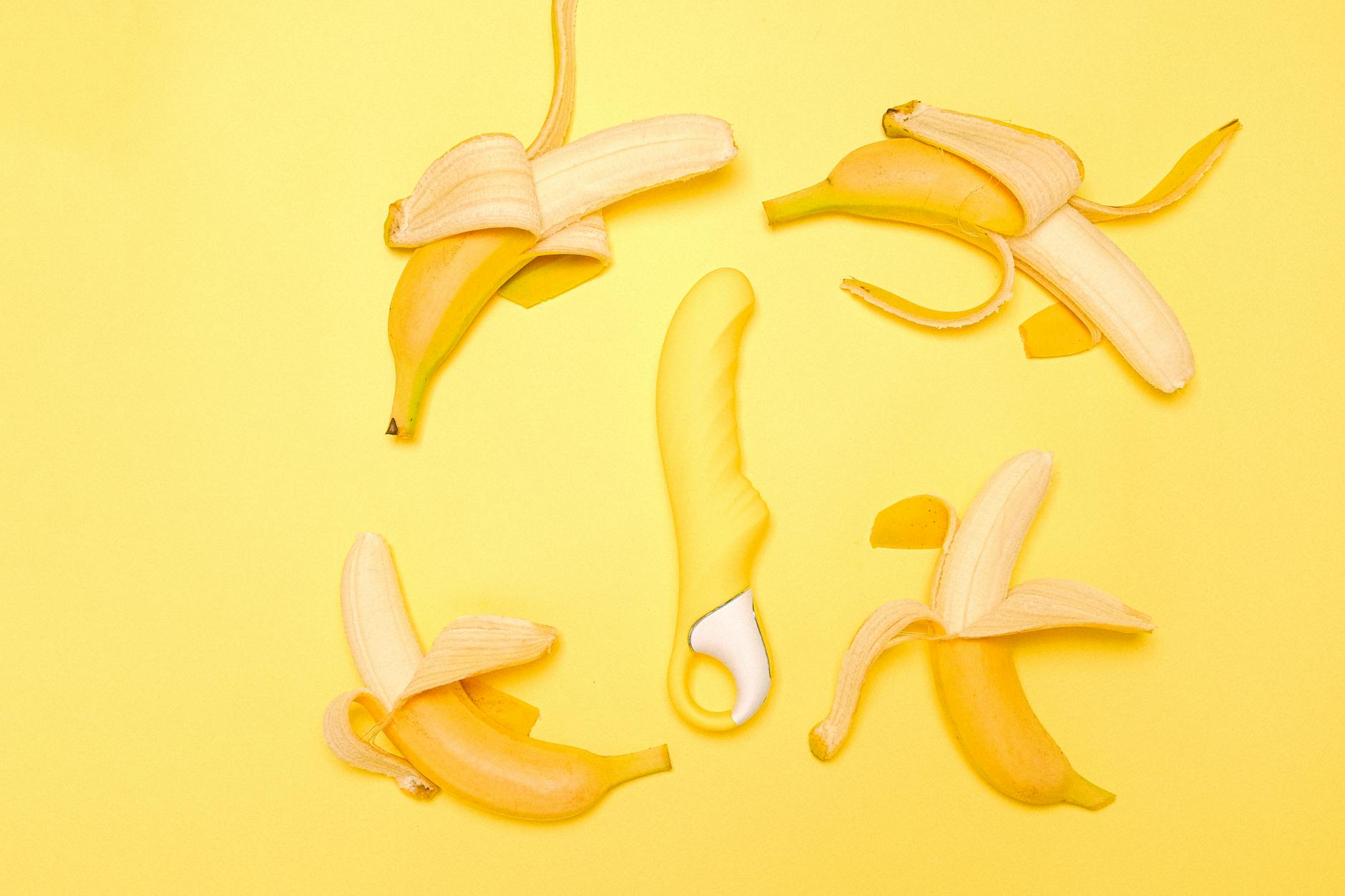
Your body's conversation with hormones never stops
Here's the thing nobody tells you: your sensitivity to touch, your arousal timeline, and how your clitoris responds to stimulation all follow your hormones like clockwork. And if you're using a lemon vibrator, that means you might need to adjust your rhythm depending on where you are in your cycle, what birth control you're on, or what hormonal shift you're moving through.
This isn't a flaw. It's biology. And understanding it changes everything about how you experience pleasure.
How estrogen and progesterone rewire your sensitivity
Estrogen peaks during the follicular phase (the first half of your cycle, before ovulation). When estrogen is high, blood flow to your genitals increases, tissue becomes more naturally lubricated, and your clitoris is more receptive to stimulation. This is the phase where you might orgasm faster, feel more sensation overall, and want lemon clitoral vibrators at higher intensities.
Progesterone dominates after ovulation, in the luteal phase. Higher progesterone blunts some of that heightened sensitivity. Arousal takes longer. Your clitoris might feel less reactive. You're not broken. Your hormones are just whispering a different instruction set to your nervous system.
Many people find that the week before their period, sensation feels almost numb by comparison to their ovulation window. That's progesterone at work. Some report that lemon suction vibrators actually feel better in this phase because the gentler suction mimics arousal rather than forcing it.
Birth control and the sensitivity reset
Hormonal birth control flattens your cycle. Instead of riding the natural estrogen and progesterone peaks and valleys, you're on a steady, medicated baseline. This means your sensitivity doesn't fluctuate month to month. It's constant.
But here's what often surprises people: when you first start birth control, your sensitivity might feel duller overall compared to your natural cycle. This can feel like a loss. Over time, your body calibrates. But if you've been using traditional vibrators before birth control and now they feel less responsive, that's not the vibrator's fault. It's your baseline shifting.
Lemon vibrators and lemon clitoral vibrators work particularly well during this adjustment because they don't rely on deep vibration intensity. The suction mechanism stimulates differently. Many people report that when they switch to a lem vibrator after starting birth control, they regain sensation and intensity because the stimulation works through a different neural pathway.
Similarly, if you're switching birth control formulations (going from the pill to the patch, or changing progesterone ratios), your sensitivity might shift again. That two-week adjustment window where your body feels unfamiliar? That's when having a versatile tool like a lemon vibrator is useful. You can dial intensity up or down and still get where you need to go.
The perimenopause surprise
Perimenopause (the 5-10 years before your final period) is a sensitivity rollercoaster. Estrogen spikes and crashes unpredictably. Some days you'll have the arousal and responsiveness of your twenties. Other days, sensation feels distant. Lubrication becomes inconsistent. Your arousal baseline gets harder to predict.
This is when I see the most dramatic shift to lemon sexual toys. The suction-based stimulation of the lem vibrator doesn't require the same level of natural lubrication that friction-based vibrators do. It bypasses some of the physiological unpredictability and works directly with your nervous system in a way that's more stable across hormonal fluctuation.
During perimenopause, many people also report that they need longer warm-up time, but that once they're aroused, the intensity of sensation available to them through a lemon clitoral vibrator is sharper and more satisfying than with traditional vibration toys.
Thyroid, cortisol, and the hormones nobody talks about
Your thyroid controls your metabolic baseline. Low thyroid function (hypothyroidism) can blunt sensation, lower libido, and make arousal feel sluggish even when other hormones are fine. High cortisol (chronic stress) does similar damage. These hormones don't cycle the way estrogen does, but they absolutely color your sensitivity week to week.
If you're on thyroid medication, a change in dosage can shift your sexual response noticeably. Same with treating cortisol through stress management. I've had many clients report that once they stabilized their thyroid or addressed chronic stress, their pleasure came back online, and tools like lemon adult toys suddenly felt more responsive because their baseline sensitivity improved.
The practical takeaway: if your pleasure feels off and you can't attribute it to your cycle, consider whether you're under unusual stress or if there's a thyroid issue brewing. Sometimes the vibrator isn't the problem. The signaling between your brain and your body is.
How to adjust your lemon vibrator practice across the month
Let's get specific. Here's what I recommend for cycling bodies:
Follicular phase (menstruation through ovulation). You're high estrogen, high arousal, high sensitivity. Start at pattern 3 or 4 on your lem vibrator. Warm-up time might be as short as 5-10 minutes. You might orgasm faster than usual. This is a good phase to explore higher intensities and longer sessions because your tissue can handle it.
Ovulation window (2-3 days around ovulation). Peak sensitivity. This is when you might want to go all the way to pattern 5 if you have a lem vibrator with multiple settings. Arousal happens almost immediately. Many people report their most intense orgasms here.
Luteal phase (after ovulation until period). Progesterone rising, sensitivity lowering. Start at pattern 1 or 2. Budget 15-20 minutes for warm-up. You're not less capable of orgasm. You just need more time and often more deliberate approach. Lemon suction vibrators shine here because the sensation feels more like partnership and less like forcing arousal.
Right before period. Sensitivity is at its lowest but sometimes orgasms feel deepest because of pelvic floor engagement. Try lower intensities with longer sessions. Some people find that the week before their period is when they get their most emotionally connected orgasms, even if the sensation feels quieter.
What changes when you switch birth control
The adjustment window is real. First two to three weeks on a new formulation, your sensitivity is recalibrating. This is when people often panic that their lemon vibrator stopped working. It didn't. Your baseline shifted.
Give yourself four to six weeks before deciding whether a new birth control is right for you in terms of pleasure. Your body is rebuilding its sense of normal. If after six weeks sensation still feels muted, you might genuinely have lower libido on that particular formulation. That's worth discussing with your prescriber. But the first month? That's noise, not signal.
The connection between mental hormones and physical response
Dopamine (your pleasure and motivation neurotransmitter) is hormonal too, in the sense that it fluctuates with your cycle and with life stress. Low dopamine makes everything feel less rewarding, including sex. This is partly why depression, anxiety, and chronic stress can make even your favorite lemon clitoral vibrator feel less responsive. Your brain isn't sending the same pleasure signals.
If you've noticed a sudden drop in sensation or responsiveness, check in with your mental health baseline. Are you sleeping? Is your stress manageable? Are you on a medication that might affect dopamine? Sometimes the issue isn't physiological sensitivity. It's your brain's reward system quieting down.
Adjusting your approach during major hormonal shifts
Birth control changes, going off hormonal contraception, starting menopause, thyroid shifts, diabetes or PCOS diagnosis. These are all moments when your sensory and arousal baseline rewires. It's not permanent. But it's real, and pretending it isn't just creates frustration.
When you're in a major hormonal transition, be gentle with yourself. Your body isn't broken. It's renegotiating its conversation with your nervous system. A lemon vibrator's flexibility helps during these windows because you're not locked into one intensity or one sensation pattern. You can dial up or down based on what your body is telling you today.
Many people find that having access to multiple intensity levels, the way you do with a lem vibrator or other lemon sexual toys, makes hormonal transitions feel less chaotic. You're not reaching for a brand-new toy. You're just adjusting the one you know.
FAQ: Hormones and lemon vibrator response
Why does my lem vibrator feel less intense during my period?
During menstruation and the first few days after, estrogen is at its lowest point and progesterone is still present. This combination naturally lowers clitoral sensitivity and blood flow to genital tissue. Your vibrator hasn't changed. Your sensory baseline has. This is temporary and completely normal. Many people find that the week after their period, sensation snaps back.
Can birth control actually affect how a lemon vibrator feels?
Absolutely. Hormonal birth control stabilizes your estrogen and progesterone at a steady level, which can feel like a reduction in overall sensitivity compared to your natural cycle peaks. If you've switched to a lemon clitoral vibrator after starting birth control and noticed a difference, you're noticing your baseline shifting, not a problem with the toy. Give yourself 4-6 weeks to adjust.
Is it normal to need different intensities on different days of my cycle?
Completely normal. Many cycling people find they prefer pattern 1-2 during their luteal phase and pattern 4-5 during ovulation. This isn't a sign you need a new toy. It's evidence that your body is working exactly as designed. Flexibility in your lemon sexual toys is a feature, not a limitation.
What if I'm on birth control and feel no sensation fluctuation at all?
Some people on hormonal birth control report steady sensitivity throughout the month, which is the point of the medication. Others still feel subtle fluctuations. Both are normal. Your individual neurobiology matters as much as your hormones do. If you feel you're missing the natural rhythm, that's worth discussing with your provider. If you're happy with steady baseline sensitivity, you're doing fine.
Does going off birth control reset how lemon vibrators feel?
Yes, but it takes time. The first 2-3 months off hormonal birth control, your cycle is often irregular and your sensitivity baseline is chaotic as your body relearns its natural rhythm. By month 4-6, most people report that their natural cycle sensitivity pattern comes back online. This is an adjustment window, not permanent change. Many people rediscover a depth of sensation they'd forgotten about.
Can stress affect lemon vibrator sensitivity the same way hormones do?
Yes. High cortisol (your stress hormone) dampens dopamine and can lower genital blood flow. This creates a sensation dulling that mimics some of what happens in the luteal phase, even if your estrogen is high. If you notice sensation drops during high-stress periods and bounces back when you rest, that's cortisol at work. It's not your vibrator. It's your nervous system protecting itself.
The bigger picture: your body isn't broken
Hormones orchestrate sensitivity, lubrication, arousal speed, and orgasm intensity. They shift constantly. This isn't a design flaw. It's your biology doing exactly what it's supposed to do. The practice is learning to listen to those shifts instead of fighting them.
Tools like the lem vibrator exist partly because they adapt well to these fluctuations. The suction mechanism works differently than traditional vibration. It can help you navigate hormonal transitions with less friction and more responsiveness.
Want to deepen your understanding of how your pleasure works across your cycle? Learning to recover sensation in your clitoris after long-term vibrator use offers complementary insights. Or explore how lemon vibrators work particularly well with reduced natural lubrication, a common shift during hormonal transitions.
Your pleasure matters. Your hormones are part of the conversation, not an obstacle to it. The more you understand how they work, the more you can work with them instead of against them.